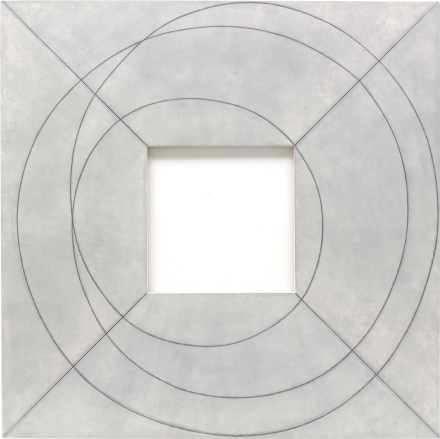
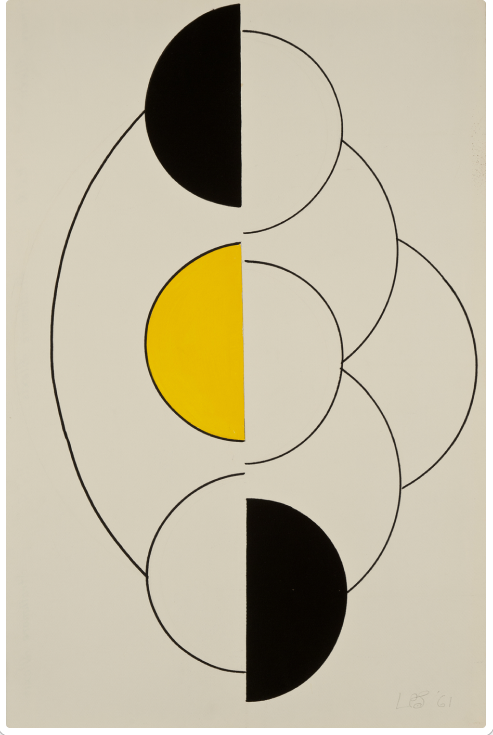
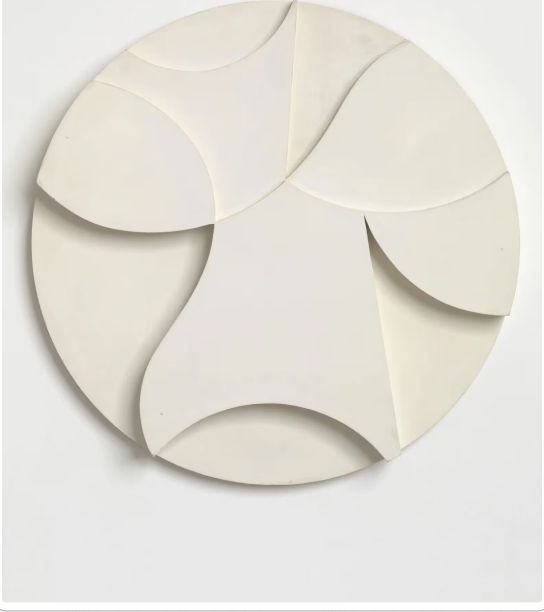
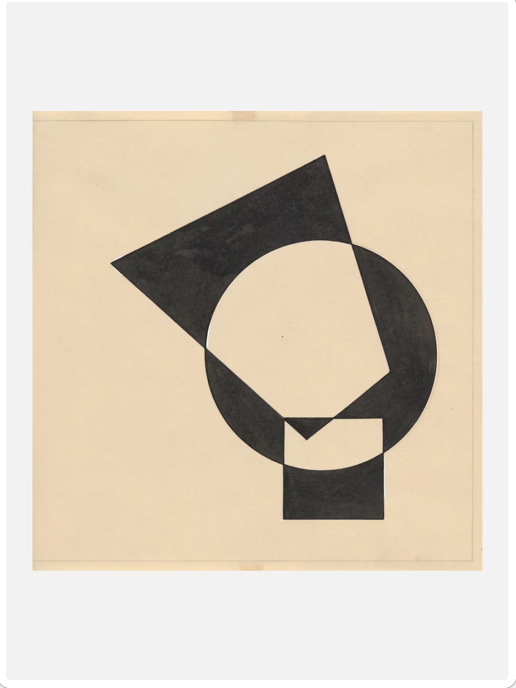
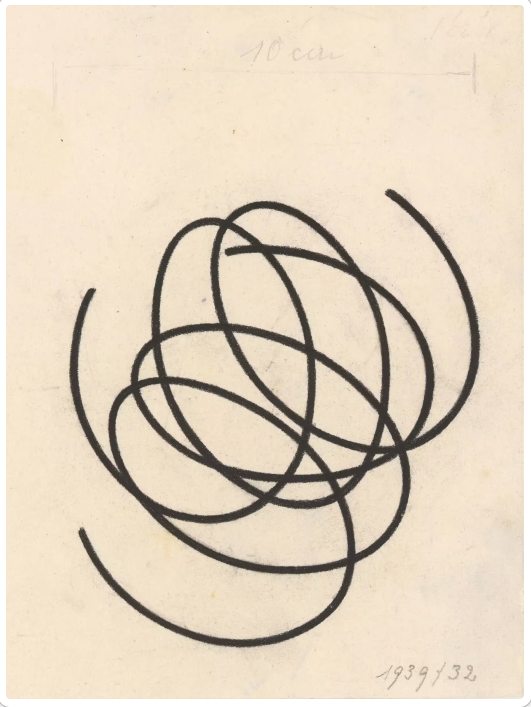
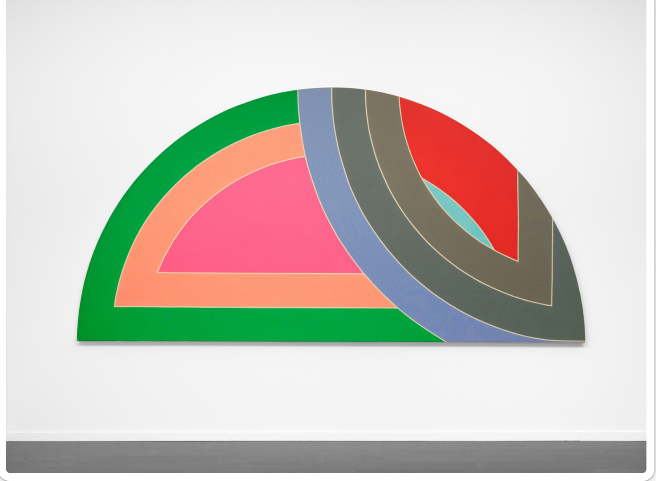
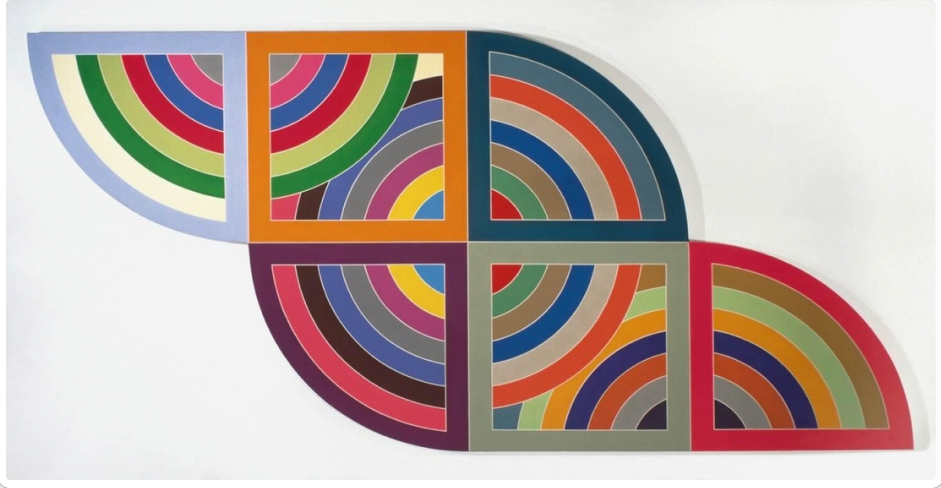
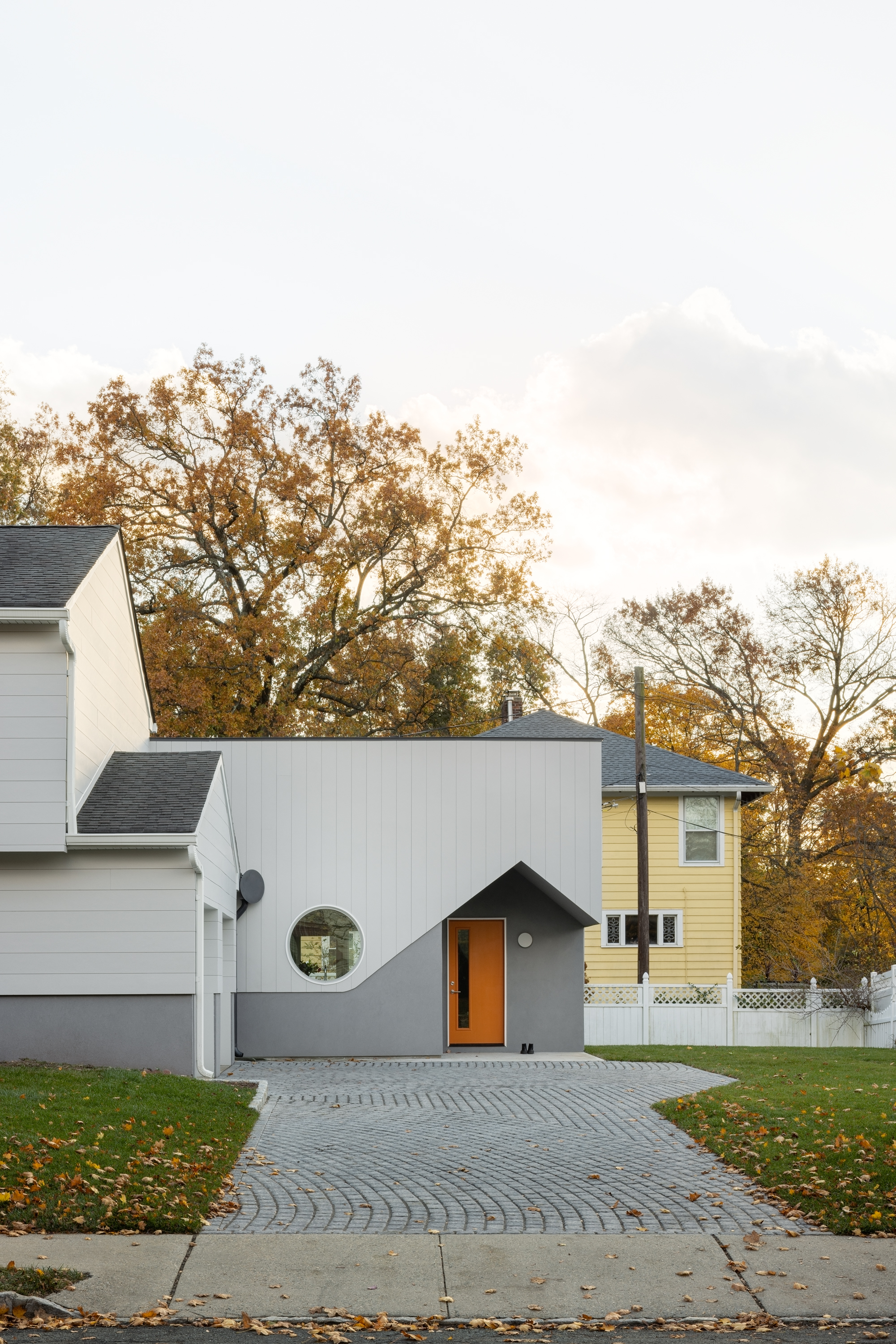
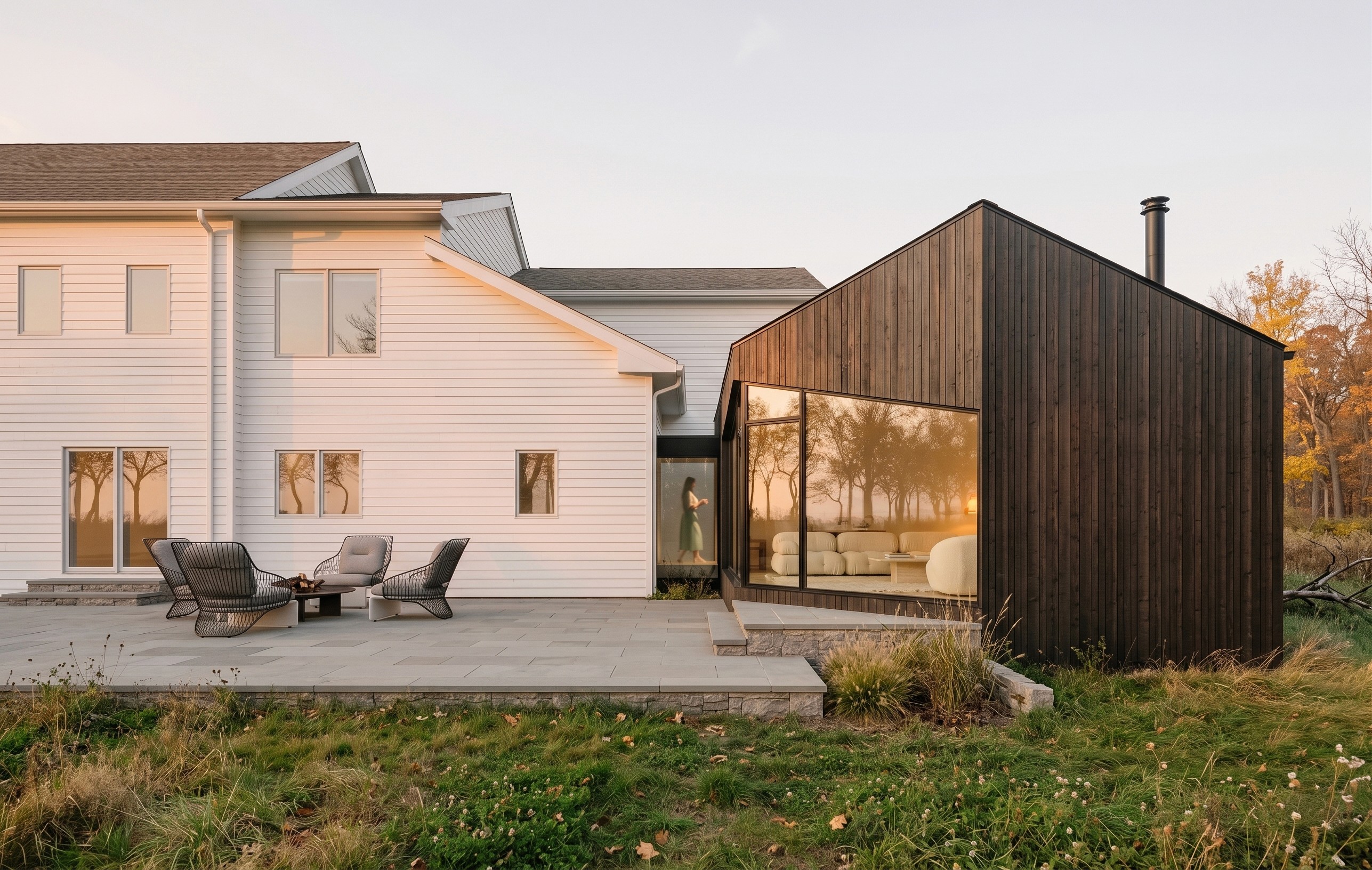
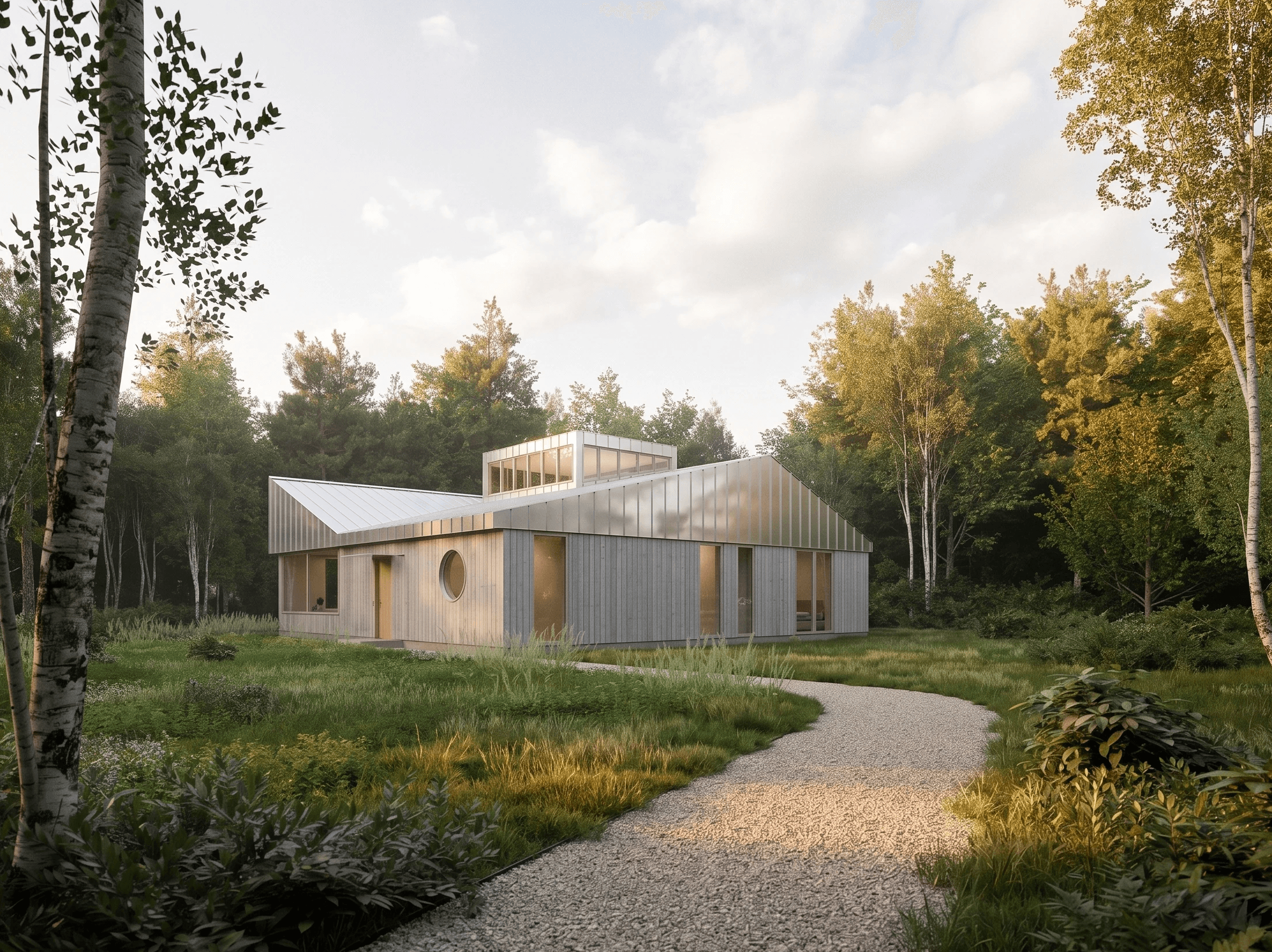
Kelly, Mangold, Taeuber-Arp, and Stella were the key references in our geometric exploration of Swoop ADU. Each works through reduction, sets a shaped edge against a flat color field, and draws a line that implies continuation beyond the surface it's on. We understood the material seam at Swoop ADU in the same way: a line abstracted until it reads continuously from the main house through to the ADU.
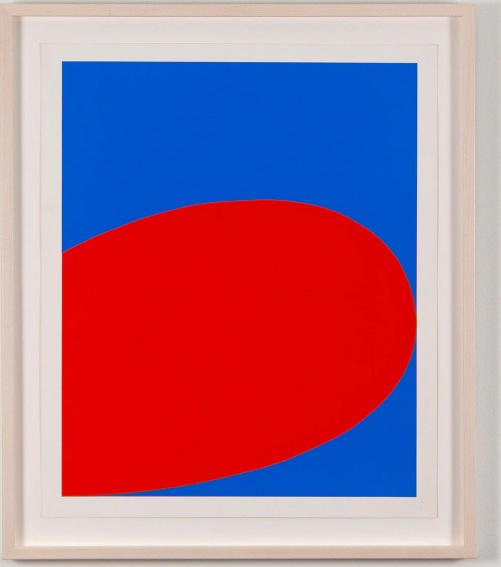
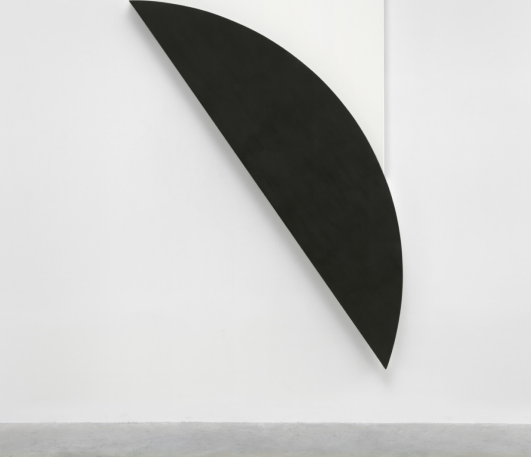
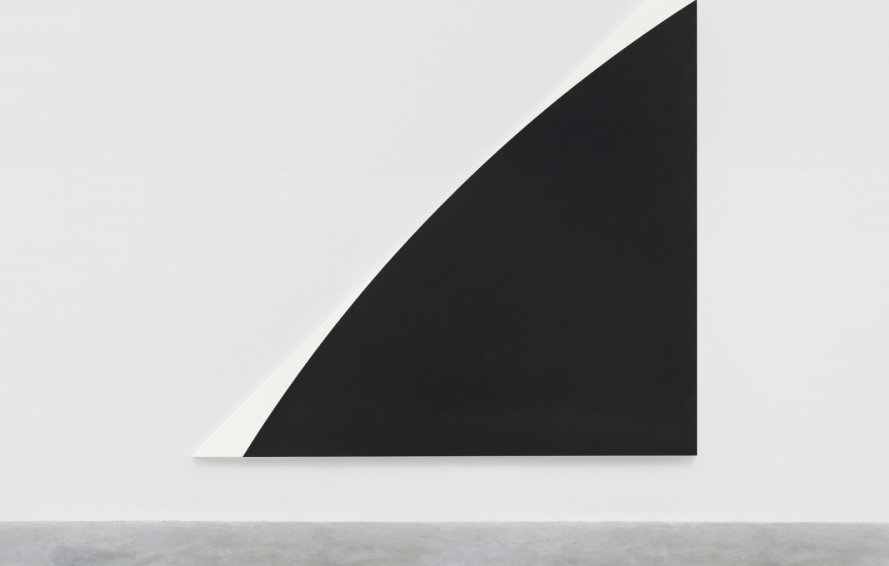
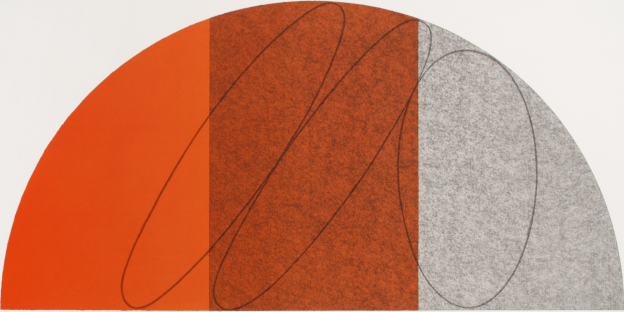
Ellsworth Kelly cuts the curve out of the wall and turns the room into a frame. Robert Mangold plays with the idea of the almost-circle, drawing the square inside the arc until the two not quite contain each other. Sophie Taeuber-Arp builds compositions where the half-circle, the disc, and the square arrive in tight rhythm, each one displacing the next. Frank Stella takes the protractor and the half-round and treats them as armatures for color, so the geometry becomes a kind of fretwork the hues are stretched across.
(Fig. 1)Ellsworth Kelly, Red Curve over Blue, screenprint.Ellsworth Kelly Studio
(Fig. 2)Ellsworth Kelly, shaped wall relief. White field with cut black arc.Matthew Marks Gallery
(Fig. 3)Ellsworth Kelly, Black Triangle with White. A single shape that turns the gallery wall into a participant in the composition.Matthew Marks Gallery
(Fig. 4)Robert Mangold, semicircle with ellipses. Chalk-line drawing inscribed onto a band of orange and grey.Pace Gallery